

HOMILY FOR TWENTY-FOURTH SUNDAY - 13 September 2026
At the heart of Christianity is an experience of the forgiveness of sins. We can’t say that we have begun to understand the Gospel if we do not have a profound sense of our need for God’s forgiveness. When we hold onto resentment and unforgiveness we wound ourselves and prevent our own healing and peace.
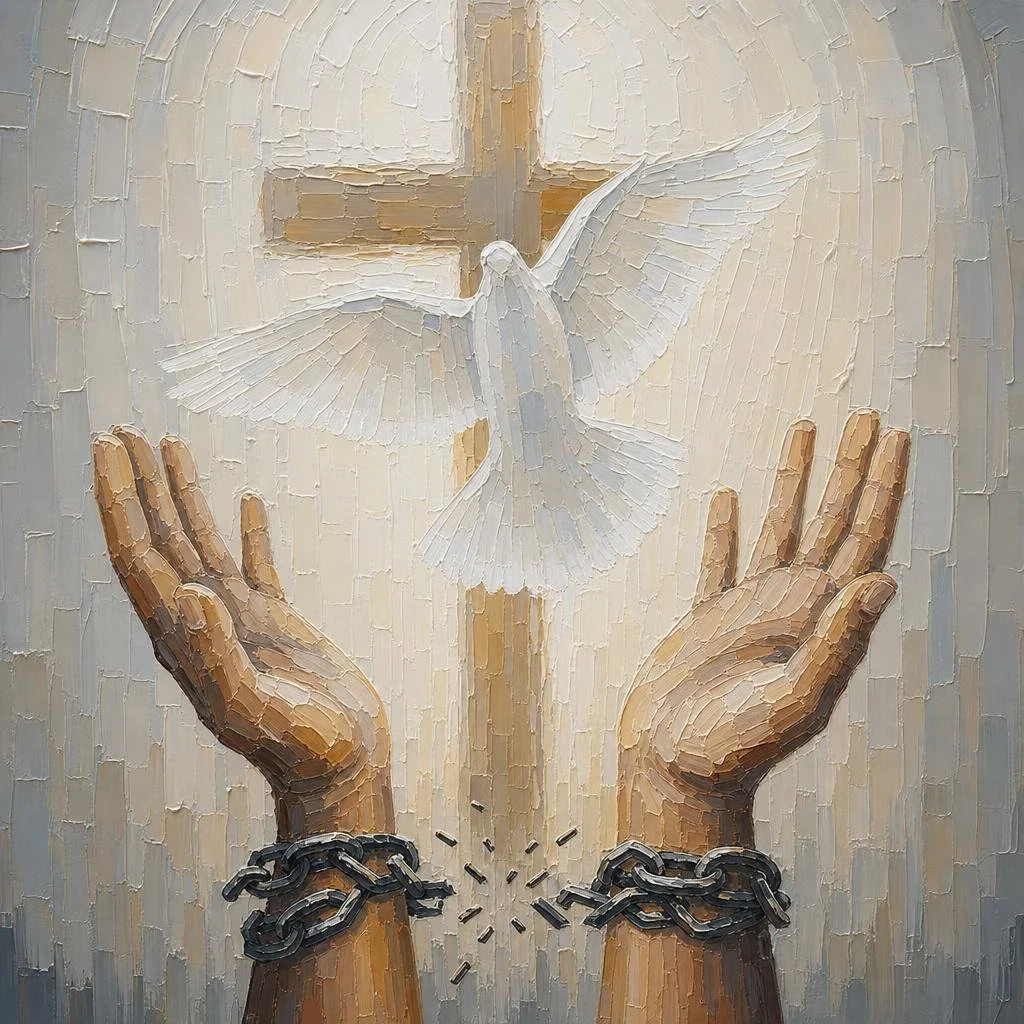
Corrie ten Boom was a Dutch Christian who hid Jews from the Nazis, and was caught and sent to Ravensbrück Camp, where her sister died and where she herself suffered great cruelty. In 1947, two years after her release from Ravensbrück, Corrie ten Boom was speaking in a church in Munich about God's forgiveness. Afterward, a man came toward her with his hand outstretched, and she recognised him at once as one of the guards who had overseen her and the other women at the camp. He told her he had since become a Christian, and he knew God had forgiven him for what he had done there — but he asked if she could forgive him too. For a long moment she stood frozen, unable to lift her hand. She prayed silently for help, and as she forced her hand into his, she felt forgiveness flow through her, and the hatred she had carried for years finally lifted.
At the heart of Christianity
At the heart of Christianity is an experience of the forgiveness of sins. We can’t say that we have begun to understand the Gospel if we do not have a profound sense of our need for God’s forgiveness.
If you have managed to get through life so far without anyone really doing anything significantly bad to you, without anyone really hurting you to any serious degree; if you have never really found it difficult to forgive someone because no-one has seriously hurt you before, then the point the Gospel is making today may not seem so profound, may not seem so unreasonable, may not seem too demanding.
But imagine, and perhaps many of us don’t need to imagine too much, we have been deeply hurt by another … then there is no doubt that today’s Gospel would present a challenge that would go to the heart of our being. Jesus teaches that unless we forgive others who have sinned against us, we cannot be forgiven ourselves by God. Because Jesus teaches about forgiveness and mercy so often in the Gospels, we should realise that it is something that is deeply important and relevant to all of us.
Way beyond human standards
In today’s Gospel passage Peter probably thinks he is being quite generous in suggesting that forgiveness should be given seven times, and from a human point of view, we could all agree that this is more than reasonable. But Jesus undercuts this completely by giving a measure that is way beyond human standards. And then he gives a parable to illustrate the importance of this forgiveness.
The key principle in the parable is that the one who was in the greatest need of forgiveness, and who received this forgiveness, was bound then to show forgiveness to another who was in need of forgiveness from him. We are meant to read this and understand this in terms of our own need for forgiveness before God. Who of us could say that we are not utterly dependent on the mercy of God? How paralysed and lost we would be if the sins of our past were to be held against us by God? We who have experienced the new life and release that comes with God’s forgiveness, are bound to be merciful to others.
An extreme example
The parable gives an extreme example of what we human beings can be like in terms of unforgiveness. The servant, who had been forgiven a huge debt, refused to forgive one of his fellow servants who owed him a ridiculously smaller amount. Isn’t it true that this is a realistic image of how we can end up treating one another?
Set the condition for our own forgiveness
In the Our Father prayer, which we pray so many times a day and which Jesus himself gave us, we ourselves set the condition for our own forgiveness: we ask to be forgiven in the measure that we forgive others. We pray, “Forgive us our trespasses, as we forgive those who trespass against us.” The “as” in this sentence introduces a conditional clause. We are asking God to forgive us because we forgive others. We say this prayer so regularly, perhaps often without considering what we are committing to ourselves by our prayer. By our own words we limit our own forgiveness to the degree to which we are prepared to forgive others.
Have you ever heard someone remark in anger and hurt, referring to a long-standing painful experience that they have had, “I will never forgive him for what he did to me”? Perhaps you were shocked that they could say such a profoundly damming thing, something that contradicts the heart of the Gospel. You might have asked yourself: Has this person ever really been touched by the mystery of Christ? Have they ever really been desperate in their own need for forgiveness before someone else or before God? Surely if they had truly come to know Christ’s forgiveness and compassion, and had felt their own desperate need for the forgiveness of another person, or of God, they would not be able to say such a thing.
capable of the same
But before we judge someone who we might have heard say such a thing, let us recognise that every one of us is capable of the same. Every one of us has a limit beyond which we would find it difficult to forgive another. Surely, we can imagine for ourselves the terrible things someone might do to us or someone we love, and which we would find it difficult to forgive.
rooted in the forgiving nature of God
So, where does this teaching on forgiveness come from? Where is it rooted? Firstly, our forgiving others is rooted in the forgiving nature of God. As the psalm says: “The Lord is compassion and love, slow to anger and rich in mercy.” The forgiveness we receive from God is undeserved. Nothing we can do, can merit it. It is a free gift. It has already been achieved by the sacrifice of Jesus. Our forgiveness is not to be taken for granted. It is not cheap and easy. It is an expression of the profound love and compassion that God has for us.
Secondly, we can say that forgiveness is never deserved. We don’t forgive someone because they deserve to be forgiven. It is something that is given precisely because it is not deserved, not merited, otherwise it would not be forgiveness. If we don’t deserve forgiveness and yet ask for it, it is reasonable to expect that we ought to give forgiveness that is undeserved. The parable in the Gospel illustrates this point well. Even so, in some circumstances it might take a supreme act of will and divine help for us to forgive.
prevent our own healing and peace
Why would God work according to such a precept whereby we are only forgiven according to how much we forgive others? Well, not only is it a case of simple justice, but also our not forgiving others, wounds us. Unforgiveness does us more harm than the person whom we refuse to forgive. When we hold onto resentment and unforgiveness we wound ourselves and prevent our own healing and peace. Our unforgiveness can be like a festering tumour within us, infecting our thoughts, our words and our actions, robbing us of happiness.
Perhaps you have come across people who have come to the point of forgiving someone who has hurt them greatly and have seen the liberating effect that it has - the burden that lifts with forgiving others. Also, we remember that it is not so much a case of God not forgiving us because we won’t forgive another; it is that we block the receiving of God’s forgiveness through our refusal to forgive others.
Praying for the willingness to forgive
So, where would we start in the matter of forgiving another who has hurt us greatly? In really difficult matters, we can start by praying for the willingness to forgive. It’s a good place to start, and in such a God-like matter, God is sure to give the divine help we need to come to forgiveness. Forgiveness is not an easy thing, but God who knows its importance for our own well-being and those who need our forgiveness, will help us. The Gospel is not for softies, not for babies or weaklings … it takes mature, large-hearted human beings who have been touched by the mystery of Christ, who have experienced the compassion and love of Jesus.
