

Homily for the Baptism of the Lord
Through baptism, we are adopted as children of God and called to share in Christ’s mission, bearing the mark of belonging to him and living in relationship with him.
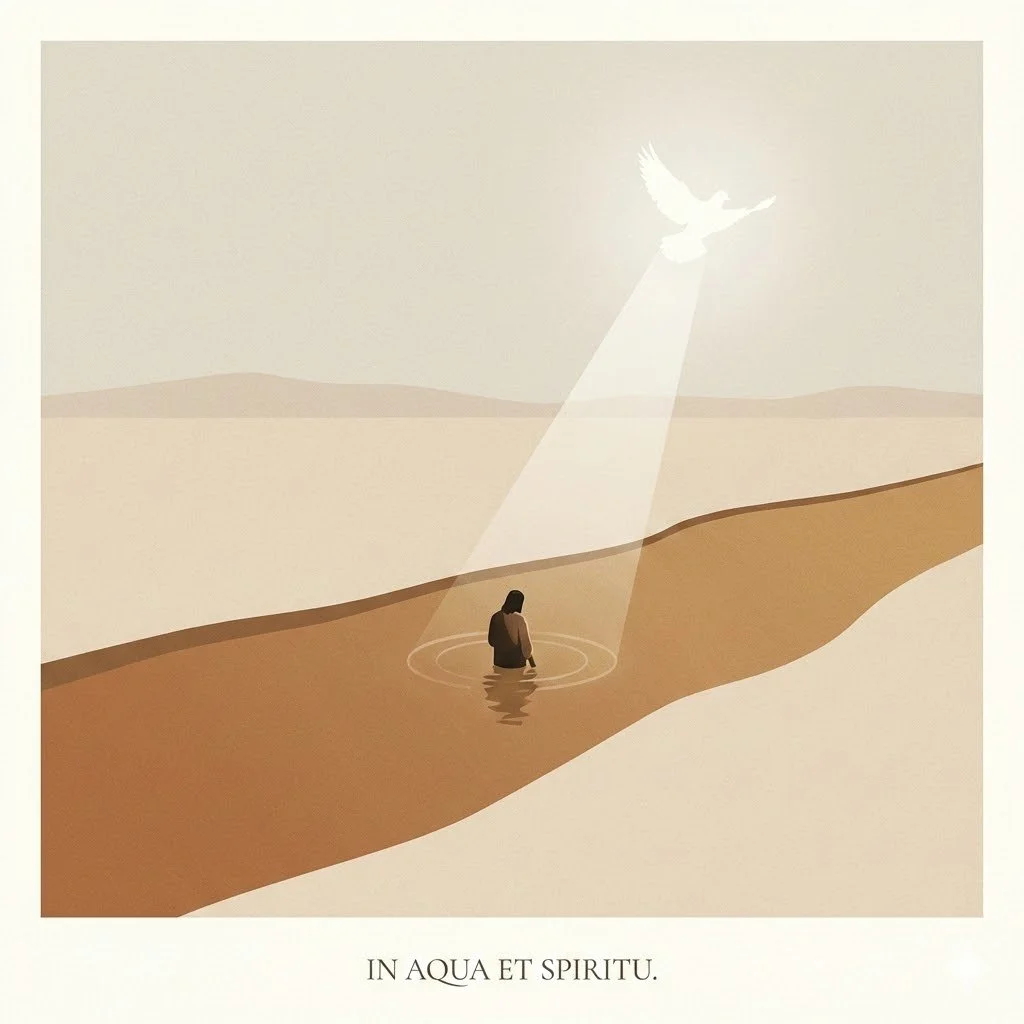
When the Father Calls You Beloved - AI generated
Every year when we celebrate this feast, I am reminded of my own visits to the site on the Jordan River where Jesus was baptised by John. It is a moving experience. There is a mood of anticipation there, as if something profound is about to happen. When you stand there, it is not difficult to imagine the scene two thousand years ago, with crowds coming to John the Baptist at the Jordan to be baptised.
This baptismal site lies in the middle of the desert, and every time I have been there it has been incredibly hot - around forty degrees Celsius. It is one of the lowest places on earth, and even the water bottles you carry begin to crumple because of the atmospheric pressure. In the midst of this harsh, barren landscape flows a slow-moving, muddy, clay-coloured river.
At the baptismal site, pilgrims read the Gospel account of the Baptism of Jesus. They renew their baptismal promises and are sprinkled with water from the Jordan. With this water, consecrated by Jesus through his own baptism, pilgrims pray for a renewal of baptismal grace in their lives. As we celebrate this feast today, we too can imaginatively place ourselves there and receive that cool water as a renewal of baptismal grace within us. We are invited to recall our own baptism, to remember our identity as baptised Christians, and to pray that this identity may be renewed in us.
The story of Jesus’ baptism is told in all four Gospels. That alone tells us how important this event was for the early Christian community. Yet the Baptism of the Lord is also delightfully problematic, because it raises some important questions.
For example, Jesus’ baptism marks the beginning of his public ministry, when he was about thirty years old. So, we might reasonably ask: What is the connection between this celebration and the events we have recently celebrated - the birth of Jesus in Bethlehem and the Epiphany to the
Gentiles, represented by the Magi? How do we move, liturgically speaking, from the infancy narratives to the beginning of Jesus’ adult ministry so quickly?
The answer is that the Nativity, the Epiphany, and the Baptism of the Lord are all epiphanies - all manifestations of God’s presence in the person of Jesus Christ. In his baptism, Jesus is revealed as the long-awaited Messiah. The Incarnation - God taking on our human nature - makes this “showing of God” possible. God reveals himself so that we may know him, love him, and live in relationship with him. We should never lose our sense of awe at the extraordinary lengths to which God goes to make himself known to us.
In fact, the Baptism of the Lord is also a theophany, a revelation of God as Trinity. God the Son is baptised; God the Holy Spirit descends upon him like a dove; and God the Father’s voice is heard from heaven: “You are my beloved Son.”
A second question naturally follows: Why would Jesus submit to John’s baptism, which was a baptism of repentance? If Jesus is truly without sin, why would he need such a baptism at all? John the Baptist himself struggles with this question. In today’s Gospel, we hear that he tries to prevent Jesus, saying that it is he who needs to be baptised by Jesus. The other Gospel accounts also tell us that John hesitates.
Jesus’ baptism shows us that he identifies himself fully with humanity. The sinless one chooses to stand among sinners. Through this act, Jesus reveals God’s presence among his people and begins the final phase of his mission for our salvation, following his hidden life at Nazareth. By allowing himself to be baptised, Jesus shows that he is with us in our human condition. He enters the muddy waters of our humanity and, in doing so, consecrates water for our baptism.
So, what does the Baptism of Jesus mean for us?
It reminds us of our own baptism, by which we are united to Christ and called to share in his mission. Through baptism, we are adopted as children of God, and the words spoken by the Father to Jesus are spoken to us as well: “You are my beloved; with you I am well pleased.”
Today we renew our awareness that baptism places us in a profound, grace- filled relationship with God. We bear the mark of belonging to him. We are adopted as sons and daughters of God, re-formed and patterned according to Jesus Christ. As brothers and sisters of Christ, we can call God Abba, Father. Pope Saint Leo the Great once said, “Be aware of your nobility, O Christian; it is Christ’s own nature that you share.” Our baptism gives us an extraordinary dignity. Just as the Holy Spirit descended upon Jesus, so the Holy Spirit has been breathed into us. As Christians, we are temples of the Holy Spirit.
One of the great lies of some modern psychologies is that happiness comes from absolute freedom and the unlimited pursuit of our dreams. The world encourages us to seek fulfilment in success, wealth, and self-focus. But the Gospel tells us something very different: your life is not about you. As Saint Paul writes to the Corinthians, “You are not your own; you were bought at a price. Therefore, glorify God with your body.” Through baptism, we belong to God. Through his baptism in the Jordan, Jesus identifies himself with us; through our baptism, we are identified with him.
One challenge of infant baptism - despite its many good reasons - is that we can easily forget our baptismal identity. Many baptised Catholics are no longer in touch with the profound and irreversible bond established between them and God through baptism. That identity can never be erased, but it can be forgotten.
God never forgets who we are, but we are quite capable of forgetting God - and forgetting who we are to God. That is why we need to be continually re-evangelised, continually brought back into a living relationship with Jesus. Celebrations like today help us reclaim our baptismal identity. They place us in a spiritual space where we can once again hear God saying to us, “You are my beloved son,” or “You are my beloved daughter.”
The feast of the Baptism of the Lord, like all the epiphanies we have celebrated, calls for a response. If God reveals himself so that we may know him and live in relationship with him, then we must receive that revelation and commit ourselves to it. We are invited to enter into communion with the God who seeks us out, claims us as his own, and saves us.
